

Pressure Measurement
Accurate pressure data is essential in process control, equipment safety, maintenance, and product quality. Whether the task involves verifying a pneumatic line, monitoring hydraulic performance, checking vacuum conditions, or confirming calibration status in a plant environment, choosing the right Pressure Measurement solution helps reduce uncertainty and improve operational reliability.
This category brings together instruments and related solutions used to measure, test, and verify pressure across industrial and technical applications. It is especially relevant for engineers, maintenance teams, laboratories, and service providers who need dependable readings for inspection, troubleshooting, and routine measurement work.
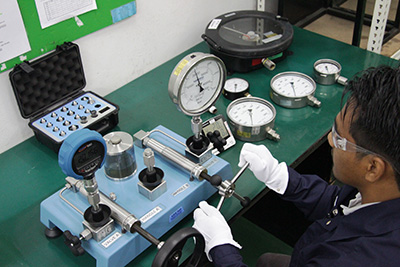
Where pressure measurement is used in industry
Pressure is one of the most frequently monitored variables in industrial systems. It affects fluid movement, process stability, sealing performance, filtration, pumping efficiency, and equipment protection. In many applications, pressure values are not viewed in isolation but as part of a broader measurement strategy alongside length measurement, mass control, or optical inspection.
Typical use cases include compressed air systems, HVAC service, hydraulic machinery, gas handling, leak testing, laboratory setups, and general process instrumentation. In these environments, the goal may be routine monitoring, comparative verification, fault diagnosis, or reference calibration, depending on how critical the process is.
Common pressure measurement tasks
Different applications require different measurement approaches. Some users need quick spot checks during maintenance, while others need stable readings for commissioning, performance verification, or traceable calibration work. Understanding the measurement task is often the first step in narrowing down the most suitable instrument type.
Common tasks in this category may include:
- Checking line pressure in pneumatic or hydraulic systems
- Verifying differential conditions across filters or process sections
- Measuring vacuum levels during service or testing
- Comparing field readings against reference devices
- Supporting calibration procedures for transmitters, gauges, and switches
In maintenance and service workflows, pressure data is often reviewed together with related variables such as temperature, flow, or electrical signals. That is why this category also fits naturally within a wider measurement and inspection environment rather than functioning as a standalone topic.
Key factors when selecting a pressure measurement instrument
A good selection process starts with the pressure range and the operating condition. Instruments must match the expected working range without forcing measurements too close to the lower or upper limit. Beyond range, buyers should consider media compatibility, required accuracy, display or output needs, connection style, and the environment in which the instrument will be used.
For field service work, portability and ease of reading may be more important than advanced integration. In laboratory or calibration settings, users may prioritize resolution, repeatability, and compatibility with controlled procedures. Where process performance is closely monitored, the right device may also need to support stable long-duration measurements and dependable verification intervals.
It is also useful to distinguish between gauge pressure, absolute pressure, vacuum, and differential pressure requirements. Choosing the wrong measurement principle can lead to confusing results even when the instrument itself is functioning correctly.
Pressure measurement within a broader instrumentation ecosystem
Pressure values often interact with other mechanical and process variables. A pressure drop may indicate clogging, leakage, pump wear, or flow restriction. In product testing or inspection, pressure readings can also support quality checks that involve sealing force, surface condition, or dimensional consistency.
For that reason, many technical teams evaluate pressure instruments alongside categories such as force, hardness, roughness, and gloss measurement or related process verification tools. This broader view helps purchasing teams build a more consistent measurement setup across production, maintenance, and calibration activities.
In calibration and service environments, pressure instruments may be used as working references or as tools for troubleshooting installed devices. The exact role depends on procedure requirements, acceptable uncertainty, and whether the instrument is intended for field verification or controlled bench work.
Manufacturers commonly associated with pressure measurement applications
Several well-known manufacturers are relevant in this category, each bringing strengths in industrial instrumentation, service tools, or calibration-oriented solutions. Names such as FLUKE, Dwyer, Brooks Instrument, DANFOSS, Jumo, and Chauvin Arnoux are often considered in projects where pressure data supports maintenance, diagnostics, or process control.
For users with more specialized requirements, brands such as INFICON may also be relevant in vacuum-related and leak-testing contexts, while other manufacturers in this category ecosystem support broader sensing and instrumentation needs. The best fit depends less on brand name alone and more on the measurement task, operating conditions, and the level of confidence required from the result.
How to compare options more effectively
When reviewing products in a pressure measurement category, it helps to compare them based on application logic rather than on isolated specifications. Start by identifying what is being measured, how often the measurement is performed, and whether the result is used for indication, process adjustment, inspection, or calibration. This approach usually leads to a better shortlist than comparing only display style or maximum range.
Buyers should also think about maintenance workflow. A technician performing quick service checks may need a practical, easy-to-carry instrument, while a metrology team may require a device that fits into documented procedures and reference comparisons. If pressure is just one part of a broader test routine, users may also benefit from reviewing nearby categories such as mass measurement when building a more complete inspection setup.
Why clear category structure matters for B2B sourcing
In B2B procurement, pressure instruments are rarely selected in isolation. Engineering teams, maintenance departments, and service organizations often need to compare multiple approaches before deciding on a suitable device or supplier path. A well-structured category makes it easier to identify relevant technologies, understand where each type of instrument fits, and move efficiently from general need to specific selection.
This is particularly useful when a company is standardizing its measurement tools across different sites or departments. Instead of focusing only on a single item, buyers can review the broader pressure measurement landscape, compare compatible manufacturers, and align instrument choice with inspection routines, maintenance practices, and calibration expectations.
Choosing the right pressure measurement path
The right solution depends on more than just the number shown on a display. Range, pressure type, operating media, environment, workflow, and accuracy expectations all influence which instrument is appropriate for the job. A category like this is most valuable when it helps users connect those practical requirements to the right measurement approach.
For teams working in industrial maintenance, calibration, test benches, or process verification, this pressure measurement range provides a useful starting point for comparing tools and building a more reliable measurement setup. Reviewing the application first and the product second is often the most effective way to make a sound technical choice.
-
-
-
-
-
-
-
-
-
-
-
-
-
-
-
-
-
-
-
-
-
-
-
-