

Mass Measurement
Accurate weighing and mass verification are essential wherever materials are purchased, processed, packaged, or controlled for quality. In industrial environments, even small deviations can affect batch consistency, compliance records, inventory accuracy, and production cost. That is why Mass Measurement equipment and related calibration services play a practical role across manufacturing, laboratories, logistics, food processing, and many other B2B settings.
This category focuses on solutions used to assess, verify, and maintain reliable mass-related measurement performance. Whether the requirement involves routine checks, traceable calibration support, or broader measurement control within a facility, the right approach helps reduce uncertainty and improve confidence in daily operations.
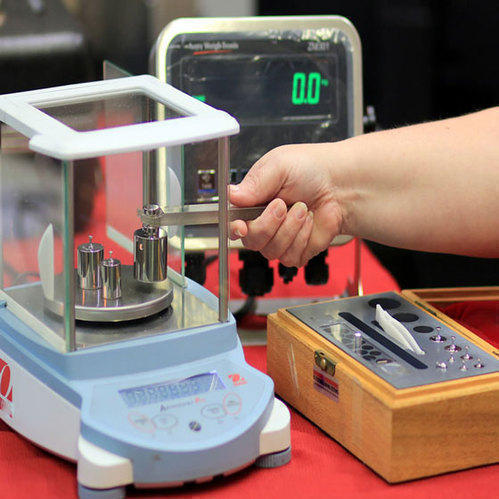
Why mass measurement matters in industrial and laboratory workflows
Mass data is often tied directly to product quality, process repeatability, and commercial transactions. A weighing error can influence formulation accuracy, filling quantity, raw material consumption, and documented test results. In regulated or quality-driven environments, reliable measurement is not only a technical requirement but also part of operational risk control.
Mass measurement is especially important when businesses need consistency between incoming inspection, in-process control, final verification, and maintenance routines. When weighing systems are checked and calibrated at suitable intervals, teams can identify drift earlier and avoid decisions based on unreliable readings.
Typical scope of mass measurement applications
This category is relevant for a wide range of use cases, from basic weight verification to more demanding measurement control tasks. Common applications include production weighing, laboratory balance checks, packaging verification, warehouse and logistics operations, and quality inspection processes where repeatable readings are required.
In many facilities, mass measurement does not stand alone. It is often part of a broader metrology workflow that also includes dimensional, pressure, or optical checks depending on the product and process. For organizations building a more complete inspection setup, related areas such as length measurement and pressure measurement may also support process validation and quality assurance.
What to consider when selecting mass measurement solutions
Choosing suitable equipment or services starts with the actual measurement task. Important factors usually include the expected weighing range, required resolution, environmental conditions, frequency of use, and the level of traceability needed for internal quality systems or external audits. The more critical the process, the more attention should be given to measurement uncertainty and documented verification procedures.
It is also useful to consider where and how the equipment will be used. A laboratory environment may prioritize precision and stability, while industrial production lines may place greater importance on robustness, throughput, and ease of routine checking. For many users, the best solution is not simply the most sensitive instrument, but the one that fits the process with a practical balance of accuracy, durability, and maintenance requirements.
The role of calibration, inspection, and ongoing verification
Calibration helps determine whether a weighing instrument continues to perform within acceptable limits. Over time, handling conditions, environmental changes, mechanical wear, or routine use can affect measurement behavior. Periodic inspection and calibration provide a structured way to detect these changes before they become larger quality issues.
For B2B users, documented verification is often just as important as the measurement itself. Service records can support internal quality management, customer requirements, and scheduled maintenance planning. In practice, a well-managed mass measurement program usually combines initial setup, routine checking, periodic calibration, and corrective action when deviations are found.
Integration with broader quality and metrology systems
Mass measurement is often one part of a larger control strategy rather than an isolated task. Many manufacturers and test facilities rely on multiple measurement disciplines to confirm that products meet specification across weight, size, appearance, surface characteristics, and functional conditions. Connecting these activities can improve traceability and make root-cause analysis easier when process variation appears.
Depending on the industry, users may also work with related inspection categories such as optical measurement for visual or dimensional evaluation, or force, hardness, roughness, and gloss measurement when product performance and surface quality must be checked together. Looking at measurement needs as a system often leads to better equipment planning and more reliable quality outcomes.
Who typically uses this category
Mass measurement solutions are commonly used by production engineers, quality teams, maintenance departments, laboratory staff, and calibration or inspection specialists. Procurement teams may also refer to this category when evaluating support for weighing systems used in manufacturing, storage, packaging, or test environments.
Industries with frequent demand for reliable weighing and verification include food and beverage, pharmaceuticals, chemicals, electronics, metalworking, plastics, logistics, and general manufacturing. Although each sector has different tolerances and operating conditions, the core requirement is similar: dependable measurement data that supports consistent decisions.
How to approach the right solution for your process
When reviewing options in this category, it helps to begin with the process risk behind the measurement. Consider what happens if readings drift, how often the instrument is used, and what documentation is required for customers or audits. This makes it easier to define whether the priority is routine verification, scheduled calibration support, or a broader measurement control program.
A clear understanding of application conditions will usually lead to better long-term results than selecting by specification alone. If your operation depends on accurate weight data for quality, compliance, or productivity, investing in an appropriate measurement workflow can reduce rework, improve traceability, and support more stable day-to-day performance.
Mass measurement remains a foundational part of industrial metrology because it directly affects quality, cost, and operational confidence. By aligning equipment selection, calibration intervals, and verification practices with the real demands of the process, businesses can build a more reliable and efficient measurement environment.
-
-
-
-
-
-
-
-
-
-
-
-
-
-
-
-
-
-
-
-
-
-
-
-