

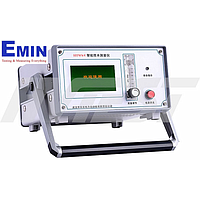
SF6 Gas analyzer Repair Service
Accurate SF6 analysis is essential in high-voltage maintenance, gas-insulated switchgear service, and condition-based asset management. When an analyzer starts showing unstable readings, slow sensor response, communication errors, or failed self-checks, the impact goes beyond inconvenience—it can delay inspections, affect maintenance decisions, and reduce confidence in the test data used in the field.
SF6 Gas analyzer Repair Service is intended for organizations that rely on dependable gas quality measurements and need to restore instrument performance in a practical, service-oriented way. For utilities, testing teams, industrial maintenance contractors, and technical service departments, timely repair helps extend equipment life and supports more consistent measurement results across critical electrical applications.
Why SF6 analyzer reliability matters in electrical maintenance
SF6 gas analyzers are commonly used to assess gas condition in equipment where insulation performance and operational safety are closely tied to gas quality. In day-to-day maintenance work, technicians depend on these instruments to check key parameters and verify whether equipment can remain in service, requires intervention, or should be monitored more closely.
Because these decisions often affect outage planning, switching operations, and asset health evaluation, an analyzer must deliver stable and repeatable measurement performance. A unit that drifts, fails to sample correctly, or cannot complete analysis cycles can create uncertainty in the maintenance process and increase the need for repeat testing.
Common issues that lead to repair requests
Service needs can arise from normal wear, field handling, contamination, aging internal components, or problems in the sampling path. In many cases, users first notice symptoms such as inconsistent readings, startup faults, unresponsive controls, flow-related alarms, or abnormal behavior during warm-up and measurement sequences.
Other repair cases involve power issues, display problems, damaged connectors, communication faults, or performance degradation after prolonged use in demanding site conditions. For portable test instruments, transport vibration, hose contamination, moisture exposure, and incomplete purging procedures can also contribute to operational problems over time.
A proper repair approach should focus not only on making the instrument power on again, but also on restoring the functional integrity of the analyzer as a measurement system. That includes the relationship between sensing elements, internal flow paths, electronics, user interface, and overall instrument response.
What a professional repair process typically includes
Repair work for this type of equipment generally begins with fault assessment and condition checking. The goal is to identify whether the issue is related to sensors, pumps, valves, internal tubing, control boards, display assemblies, communication functions, or supporting subsystems that affect test execution.
After diagnosis, the service process may include cleaning, component-level repair, replacement of failed parts where needed, functional restoration, and performance verification. For B2B users, this matters because a successful repair is not just about fixing an isolated fault code; it is about returning the instrument to a condition suitable for real maintenance workflows.
Instruments used alongside other electrical test platforms may also benefit from coordinated service planning. For example, companies maintaining multiple asset testing tools often review related support options such as withstand voltage test repair service when organizing broader maintenance schedules.
How to decide when repair is the right option
Repair is often the preferred path when the analyzer remains structurally intact, the fault is isolated to serviceable assemblies, and the instrument still fits current testing requirements. For many maintenance teams, restoring an existing unit can be more efficient than replacing equipment immediately, especially when operators are already trained on the workflow and accessories.
It is also reasonable to consider repair when the instrument has become unreliable only in specific operating stages, such as sample intake, stabilization, result display, or data transfer. A targeted service evaluation can help determine whether the issue is economical to address and whether the analyzer can return to dependable field use.
For organizations that manage several categories of electrical testing equipment, it can be helpful to align repair decisions across the fleet. In some cases, teams also review services for related tools such as cable fault tester repair or breaker testing equipment repair to reduce downtime across maintenance operations.
Key considerations before sending an analyzer for service
Before arranging repair, it is useful to document the fault symptoms as clearly as possible. Notes about startup behavior, error messages, sampling problems, battery or power conditions, warm-up time, and whether the issue is constant or intermittent can all help shorten troubleshooting time.
Users should also prepare any relevant accessories or supporting items if they appear connected to the issue, such as hoses, connectors, chargers, power adapters, or communication cables. In practice, some apparent analyzer faults are influenced by peripheral components or by contamination introduced through the sampling setup rather than by the core instrument alone.
If the analyzer is part of a broader test workflow, reviewing related service needs may also be worthwhile. For example, facilities that perform multiple insulation and electrical safety checks sometimes also require insulating materials tester repair service as part of a wider maintenance support plan.
Repair service value for utilities, service contractors, and industrial users
In utility and industrial environments, test equipment availability directly affects planning, field execution, and reporting timelines. A reliable repair path helps reduce instrument downtime, preserve existing equipment investment, and support continuity for teams that already operate according to established procedures.
This is especially relevant where analyzers are used repeatedly across substations, switchgear service programs, factory acceptance activities, or routine inspections. In these settings, maintaining dependable instrumentation supports both operational efficiency and confidence in the recorded results.
From a lifecycle perspective, equipment repair service also plays an important role in improving asset utilization. Rather than treating every fault as a replacement event, many B2B users prefer structured evaluation, practical restoration, and return-to-service decisions based on actual equipment condition.
Choosing support that fits technical field requirements
Not all repair needs are identical. Some users need help with obvious hardware faults, while others need investigation of measurement instability, intermittent functional issues, or post-use contamination effects. A suitable service approach should therefore consider the analyzer’s application environment, handling history, frequency of use, and the type of fault observed in operation.
For technical teams working in electrical testing, the most useful support is usually service that understands how the instrument is used in real maintenance conditions—not only how it behaves on a bench. That practical context helps ensure the repaired unit is better aligned with field expectations for sampling, analysis flow, and operator usability.
When repair is handled with that objective in mind, the result is more than a functional instrument. It is a restored tool that can return to the workflow with better reliability, clearer performance confidence, and stronger support for ongoing electrical maintenance tasks.
Final thoughts
When an SF6 analyzer becomes unreliable, prompt and well-scoped repair can help avoid unnecessary disruption to testing programs and maintenance schedules. For organizations that depend on accurate gas analysis in electrical applications, the priority is not simply to make the unit operational again, but to recover the consistency and usability required in day-to-day work.
SF6 Gas analyzer Repair Service is most valuable when viewed as part of a broader strategy for maintaining dependable test equipment. With proper fault evaluation and repair attention, businesses can extend instrument service life, support more stable measurement performance, and keep critical inspection activities moving with less interruption.
-
-
-
-
-
-
-
-
-
-
-
-
-
-
-
-
-
-
-
-
-
-
-
-