

CT/PT Tester Repair Service
Reliable transformer testing depends on instruments that remain accurate, stable, and safe to use in the field. When a CT/PT tester starts showing drift, inconsistent excitation results, communication problems, or power-related faults, timely repair helps prevent misdiagnosis during commissioning, maintenance, and substation testing work. This page covers what to expect from a CT/PT Tester Repair Service, common fault scenarios, and the practical points that matter when returning test equipment to service.
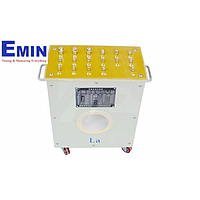
Why CT/PT tester repair matters in power testing workflows
Current transformer and potential transformer testers are used to verify ratio, polarity, excitation behavior, winding characteristics, and other performance indicators that affect protection and metering systems. If the instrument itself is no longer performing correctly, the quality of the test data becomes questionable, which can lead to rework, downtime, or unnecessary replacement decisions.
A professional repair process is important not only for restoring basic functionality, but also for preserving measurement confidence. In many industrial and utility environments, these testers are used under demanding conditions, so faults can develop gradually through transport shock, aging components, connector wear, display failures, or power supply instability.
Typical issues seen in CT/PT testers
Repair needs vary by design and usage history, but several symptoms appear frequently. Instruments may fail to boot, freeze during test sequences, lose communication with accessories or software, or display unstable readings during ratio and excitation checks. In other cases, the tester powers on but cannot complete a test reliably under load.
Another common group of faults involves damaged terminals, worn switches, battery or charging problems, and display or keypad issues that make operation difficult in the field. Because CT/PT testing often involves repeated connection and disconnection at job sites, mechanical wear can be just as important as electronic failure when evaluating service needs.
- Power-up failure or intermittent shutdown
- Abnormal readings or repeatability problems
- Communication or interface errors
- Faulty test leads, connectors, or input/output ports
- Display, keypad, or control issues
- Internal power supply or protection circuit faults
What a repair service typically includes
A structured repair evaluation usually starts with fault confirmation and overall condition assessment. This can include checking power circuits, control boards, user interface components, connection points, and functional behavior during relevant test routines. The goal is to identify not just the visible symptom, but also the underlying cause that affects test repeatability or safe operation.
Depending on the condition of the unit, service may involve component-level troubleshooting, replacement of failed internal parts, restoration of damaged connectors, and verification of operating stability after repair. For technical users, post-repair functional checks are especially important because a tester that merely powers on is not necessarily ready for field use.
In broader maintenance programs, companies often review related electrical test assets at the same time. For example, teams managing transformer and insulation diagnostics may also need support for withstand voltage test equipment repair when multiple instruments are exposed to the same site conditions.
When to send a CT/PT tester for service
Some failures are obvious, but many repair cases begin with subtle changes in behavior. If test results become inconsistent compared with previous baselines, if the instrument requires repeated restarts, or if controls become unreliable during field work, service should be considered before the next critical outage or commissioning window.
It is also a good idea to request inspection after physical impact, moisture exposure, unusual overheating, or storage in harsh environments. Even if the tester still appears usable, hidden internal damage can affect test accuracy and long-term reliability. Acting early may reduce secondary damage and shorten the overall repair cycle.
How repair supports safety, uptime, and data quality
Electrical testing instruments are part of a larger decision-making process. Maintenance teams rely on their readings to assess transformer condition, validate installation quality, and support protection-system work. A properly repaired CT/PT tester helps reduce uncertainty during those tasks and lowers the risk of repeating tests because of questionable instrument performance.
There is also a safety aspect. Equipment with unstable power behavior, damaged terminals, or compromised internal circuits should not be used casually in demanding test environments. Repair service helps return the unit to a more dependable operating condition and supports safer handling by technicians working around energized or high-value assets.
Organizations with mixed fleets may also need attention for other specialized testers, such as cable fault tester repair services or insulating materials tester repair, especially when preventive maintenance is being planned across several asset groups.
Practical points to prepare before requesting repair
Clear fault information helps speed up troubleshooting. If available, note the exact symptom, when it occurs, whether the issue is constant or intermittent, and whether it appears during a specific test function. Information about recent transport, storage conditions, accessory changes, or prior repair history can also make diagnosis more efficient.
It is useful to include any relevant operational observations, such as unusual noises, overheating, failed charging behavior, or error messages shown on the screen. If the equipment is part of a larger electrical testing setup, mentioning related issues with companion instruments may also be helpful. In some maintenance environments, customers review adjacent services such as breaker testing equipment repair to align repair planning across the test bench.
Choosing the right service approach for CT/PT testers
Not every fault has the same operational impact. For some users, restoring boot-up and interface functionality is the immediate priority. For others, the key concern is whether the tester can again perform stable transformer measurements under normal field conditions. A good repair path considers both electronic restoration and the instrument’s intended testing role.
It also helps to evaluate repair within the context of service continuity. If the tester is used in substation maintenance, commissioning, or protection verification, turnaround time, fault traceability, and post-repair functional confirmation are often just as important as the repair itself. This is why repair should be viewed as part of equipment lifecycle management rather than a one-time fix.
Conclusion
When a CT/PT tester becomes unreliable, the problem affects more than one instrument—it can impact inspection schedules, maintenance decisions, and confidence in electrical test results. A focused CT/PT tester repair service helps address power, interface, measurement, and hardware faults so the equipment can return to productive use with better stability and usability.
For teams responsible for utility, industrial, or field testing operations, timely repair is a practical way to protect both instrument performance and workflow continuity. If your unit is showing abnormal behavior, inconsistent readings, or physical wear that interferes with operation, a proper service evaluation is the right next step.
-
-
-
-
-
-
-
-
-
-
-
-
-
-
-
-
-
-
-
-
-
-
-
-