

Check Hole Gauge
Reliable dimensional control often depends on measurements taken inside bores, slots, and other internal features where external tools cannot provide enough confidence. In these cases, a Check Hole Gauge plays an important role in confirming whether a hole size remains within the required tolerance, especially in machining, tooling, maintenance, and incoming inspection workflows.
This inspection service is intended for users who need consistent verification of hole gauges used in daily production and quality control. Regular inspection helps reduce measurement uncertainty, supports traceability, and makes it easier to judge product conformity when internal dimensions are critical to assembly or functional fit.
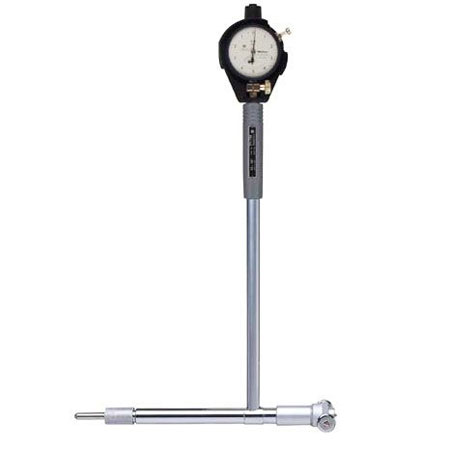
Why check hole gauge inspection matters
Hole gauges are typically used to assess internal diameters or to confirm whether a feature falls within an acceptable dimensional range. Because these tools are applied directly to tolerance decisions, wear, handling damage, contamination, or gradual dimensional drift can affect inspection results over time.
A scheduled inspection service helps users confirm that the gauge still performs as intended for practical shop-floor use. This is particularly important in environments where repeatability, interchangeability of parts, and documented quality checks are required across multiple operators or production lines.
Typical applications in manufacturing and quality control
Check hole gauges are commonly used wherever internal dimensions influence fit, sealing, alignment, or mating performance. Typical examples include machined components, fixtures, jigs, automotive parts, metalworking applications, and precision mechanical assemblies where a fast pass/fail or dimensional confirmation method is needed.
In many facilities, hole gauges are not used in isolation. They sit alongside other mechanical measuring tools, forming part of a broader inspection routine. For related dimensional verification needs, users may also review services such as micrometer inspection or callipers inspection when external dimensions and comparative measurements must be controlled together.
What is evaluated during a check hole gauge inspection
The exact inspection scope depends on the gauge type and how it is used in the customer’s process, but the main objective is to verify whether the instrument remains suitable for dimensional checking. This generally involves assessing the condition of the measuring surfaces, checking for visible wear or damage, and confirming dimensional integrity against appropriate reference standards or inspection procedures.
Attention is also given to factors that can influence practical use, such as smooth operation, contact condition, and signs of misuse that may reduce reliability. The goal is not simply to confirm that a tool exists in inventory, but to determine whether it can still support dependable internal dimension measurement in real working conditions.
When to consider inspection or re-inspection
Inspection intervals should reflect how frequently the gauge is used, the tolerance level of the parts being checked, and the production risk associated with an incorrect result. Tools used in repetitive production, final inspection, or tight-tolerance processes usually require more frequent review than gauges kept for occasional maintenance checks.
Re-inspection is also worth considering after events such as accidental dropping, suspected overuse, poor storage conditions, or any unexplained change in measurement results. If your quality workflow includes other mechanical instruments exposed to similar risks, related services such as thickness gauge inspection may be relevant as part of a wider control plan.
How to choose the right service approach
Not every application places the same demands on a hole gauge. Some users need routine confirmation for general workshop control, while others require inspection records that support stricter quality systems, customer audits, or internal traceability requirements. Before arranging service, it is useful to identify the measuring purpose, acceptance criteria, and how the gauge result is used in production decisions.
It is also helpful to review the broader measurement chain around the gauge. For example, if bore depth or stepped internal features are part of the same inspection task, depth gauge inspection may complement the control process and improve consistency across related measurements.
Supporting traceability and consistent quality decisions
One of the main benefits of periodic inspection is improved confidence in the decisions made from the gauge reading or fit result. When a check hole gauge is verified at appropriate intervals, inspection teams can work with greater consistency, reduce disputes over dimensional conformity, and maintain better alignment between production and quality assurance functions.
This is especially valuable in B2B manufacturing environments where measurement records support supplier quality, incoming inspection, in-process control, and final release activities. A well-managed gauge inspection program helps ensure that tools used for acceptance decisions remain fit for purpose rather than becoming an unnoticed source of variation.
Practical points before sending a gauge for inspection
Before service, it is a good idea to confirm the gauge identification, current condition, and any known measurement concerns observed by operators. If the tool has a history of unstable results, unusual wear, or specific application constraints, sharing that information in advance can make the inspection process more meaningful.
Clean handling and proper storage after inspection are equally important. Even a verified gauge can lose reliability if it is exposed to impact, dirt, corrosion, or unsuitable use methods. In practice, inspection works best when combined with basic instrument care, defined checking intervals, and clear responsibilities for tool control on site.
Conclusion
Choosing a professional service for check hole gauge inspection helps maintain confidence in one of the most important tasks in mechanical quality control: verifying internal dimensions accurately and consistently. Whether the gauge is used for routine workshop checks or for tighter production requirements, regular inspection supports better measurement discipline, fewer avoidable errors, and more dependable quality outcomes over time.
-
-
-
-
-
-
-
-
-
-
-
-
-
-
-
-
-
-
-
-
-
-
-
-