

Counting Scale Calibration Service
In inventory control, packaging, kitting, and small-parts handling, counting scales are relied on for more than simple weight measurement. They support piece counting based on sample weight, which means even small measurement errors can affect stock accuracy, batch preparation, and day-to-day production workflows. A reliable Counting Scale Calibration Service helps keep these instruments consistent and suitable for routine counting tasks in industrial and commercial environments.
Calibration is especially important where operators depend on repeatable unit weight calculations for screws, connectors, fittings, electronic components, or other high-volume items. When a counting scale drifts over time, quantity results may no longer match actual stock levels, leading to avoidable discrepancies in receiving, warehousing, and assembly operations.
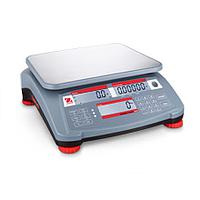
Why calibration matters for counting scales
A counting scale does not only display mass; it also converts weight information into estimated quantities. Because of this dual role, calibration supports both measurement accuracy and the reliability of counting results. If the weighing function is off, the counting function can also be affected, particularly when dealing with lightweight or closely toleranced parts.
Regular calibration helps users verify that the scale responds correctly across its intended operating range and remains dependable for routine use. It is also a practical step for companies that want better traceability in quality control, inventory checks, and internal audit processes.
Typical applications and operating environments
Counting scales are widely used in warehouses, manufacturing lines, service depots, packaging stations, and incoming inspection areas. In these settings, the goal is often to count large numbers of identical items quickly without performing a full manual count. This makes the scale an important tool for speed, consistency, and process efficiency.
Environmental conditions, handling frequency, loading habits, and relocation can all influence performance over time. Businesses that use counting scales every day, especially for small components, usually benefit from a defined calibration schedule so that counting tasks remain dependable under real operating conditions.
What to consider when selecting a calibration service
Not every weighing application has the same level of sensitivity. A business counting fasteners in bulk may have different requirements from a company handling electronic parts or precision assemblies. When reviewing a calibration service, it is useful to consider the scale’s capacity, readability, intended counting use, and how critical the result is to stock accuracy or production output.
Another key point is device compatibility. Many facilities use instruments from established brands such as AND, CAS, KERN, OHAUS, PCE, and JADEVER across multiple workstations or departments. Choosing a service that fits the installed equipment base can simplify maintenance planning and help standardize weighing practices across the site.
Examples of supported counting scale services
This category includes calibration services for well-known counting scale brands used in industrial and laboratory-related workflows. Examples include the AND Counting Scale Calibration Service, OHAUS Counting Scale Calibration Service, CAS Counting Scale Calibration Service, PCE Counting Scale Calibration Service, KERN Counting Scale Calibration Service, and JADEVER Counting Scale Calibration Service.
These examples illustrate the scope of the category rather than limiting it to a single use case. In practice, organizations often choose service coverage based on the brand already deployed in stores, production cells, or goods-handling areas, with the aim of keeping instruments stable and fit for ongoing counting work.
How counting scale calibration fits into a broader weighing program
Many companies operate more than one type of scale, and each instrument serves a different purpose within the process. Counting scales may be used for piece-based inventory tasks, while larger equipment supports palletized loads or suspended weighing. Building a structured calibration plan across all relevant devices can reduce process variation and make equipment management easier.
Where needed, related services such as floor scales calibration, crane scale calibration, or precision scale calibration may also be relevant. This is particularly useful for facilities that manage incoming materials, in-process weighing, and final dispatch using different classes of weighing equipment.
When recalibration may be needed
A routine schedule is one reason to recalibrate, but it is not the only one. Calibration should also be considered after relocation, overload events, unusual readings, mechanical shock, or any maintenance that may influence measurement behavior. Even when a scale appears to function normally, unnoticed drift can affect counting accuracy over time.
Businesses that work with small unit weights, frequent counting cycles, or tighter inventory controls often review calibration more proactively. In these cases, calibration is part of risk reduction, helping teams avoid stock mismatches, production interruptions, and manual rechecking.
Choosing the right service for your operation
The most suitable service depends on how the counting scale is used in practice. A warehouse may focus on throughput and repeatability, while a production or inspection area may place more emphasis on finer resolution and tighter process control. Understanding the role of the scale in your workflow makes it easier to select an appropriate calibration approach.
If your site uses multiple brands, it can also be helpful to review the available manufacturer-specific options, such as services associated with OHAUS and other supported makes in this category. That approach can improve service planning across mixed fleets of equipment while keeping calibration aligned with operational needs.
Supporting reliable counting and stock control
Counting scales play a practical role in reducing manual effort and improving speed in repetitive quantity checks. To get consistent results from them, the underlying weighing performance needs to remain stable. A well-matched calibration service supports that objective by helping users maintain confidence in counting outcomes across routine operations.
For organizations that depend on accurate part counts, stock visibility, and repeatable handling processes, this category provides a focused starting point for managing counting-scale performance. Reviewing the available services by brand and application can help you choose a solution that fits your equipment and your day-to-day process requirements.
-
-
-
-
-
-
-
-
-
-
-
-
-
-
-
-
-
-
-
-
-
-
-
-