

Optical fault locator Calibration Service
Reliable fiber troubleshooting depends on test tools that indicate faults clearly and consistently. When a visual or optical fault locator drifts over time, the emitted light level, beam stability, or indication accuracy may no longer match the expected performance, which can affect inspection work, maintenance routines, and field verification across fiber optic networks.
Optical fault locator Calibration Service helps maintain confidence in these handheld diagnostic tools by verifying their operating condition and restoring measurement consistency where required. This is especially relevant for maintenance teams, telecom contractors, installers, data center technicians, and service providers that rely on quick fault identification in patch cords, distribution frames, and short-distance fiber links.
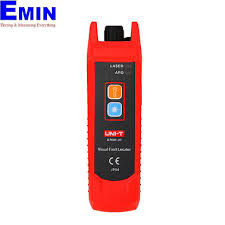
Why calibration matters for optical fault locators
An optical fault locator is commonly used to identify breaks, bends, poor terminations, or other visible issues in fiber runs. In practical use, technicians depend on stable output and dependable device behavior to trace problems efficiently, especially during installation checks or service calls where downtime needs to be minimized.
Regular calibration supports traceability, repeatability, and better decision-making in maintenance workflows. It also helps organizations align their test equipment management with internal quality procedures, scheduled service intervals, and broader asset control programs for optical inspection and fiber test instruments.
What this calibration service typically supports
This category focuses on calibration services for optical or visual fault locator devices used in fiber optic environments. The goal is not only to confirm whether the instrument is functioning, but also to assess whether it remains suitable for routine diagnostic tasks in network installation, inspection, and service operations.
Typical use cases include periodic maintenance for field tools, incoming verification of service equipment, and calibration planning for teams that manage multiple fiber test instruments. Companies that already maintain related tools may also review services for optical power meter calibration or OTDR photometer calibration service as part of a more complete optical maintenance program.
Examples of supported brands and service scope
This category may include service options for brands widely used in fiber optic testing, such as ANRITSU, Fluke Network, and AFS. Representative listings in this category include the ANRITSU Visual Fault Locator Calibration Service, Fluke Network Visual Fault Locator Calibration Service, and AFS Visual Fault Locator Calibration Service.
These examples help illustrate the brand coverage available, but the main value of the category is the service itself: checking the operational condition of the locator, documenting calibration status, and supporting equipment lifecycle management. For procurement and maintenance teams, that makes it easier to standardize service planning across different fleets of field instruments.
When to schedule calibration
Calibration intervals usually depend on how often the device is used, the environment in which it operates, and the quality requirements of the organization. Instruments used frequently in field work, exposed to transport stress, or shared among multiple teams often benefit from a clearly defined service schedule.
It is also sensible to arrange calibration after impact events, suspected performance drift, or before critical deployment projects. For organizations handling broader fiber installation and maintenance tasks, related services such as fiber optic welding machine calibration may be relevant when managing the full toolchain around splicing, inspection, and fault localization.
How to choose the right service option
When selecting an optical equipment calibration service, it is important to match the service to the actual instrument type and operating role. Buyers should check the device brand, confirm the specific service listing, and align the calibration scope with internal maintenance procedures or contractual quality requirements.
For teams that manage multiple optical test devices, it is often more efficient to review related categories together rather than treating each instrument in isolation. In some workflows, optical fault location is closely linked with analysis and verification tasks, so services such as optical analyzer calibration service may also be relevant depending on the test environment.
Benefits for maintenance, quality, and B2B procurement
From a technical perspective, calibration helps preserve service reliability and supports more consistent fault detection in day-to-day work. From a business perspective, it contributes to better equipment control, easier audit preparation, and more predictable maintenance planning for organizations that depend on fiber testing tools.
This is particularly useful in B2B settings where equipment availability, documented service history, and standardized maintenance processes matter across departments. Whether the tool is used by telecom service teams, industrial network integrators, or contractors supporting structured cabling projects, a defined calibration process helps reduce uncertainty in the field.
Supporting a more complete optical test ecosystem
Optical fault locators are only one part of a wider fiber diagnostic workflow. In many applications, they are used alongside power meters, OTDR-related tools, and splicing equipment, each with its own role in installation verification and fault analysis. Maintaining these tools under an organized calibration plan improves consistency across the entire workflow, not just at the single-device level.
For that reason, this category is most valuable when viewed as part of a broader fiber optic test equipment maintenance strategy. It supports organizations that need dependable service options for routine preventive maintenance, scheduled recertification, and practical long-term control of optical diagnostic assets.
Final thoughts
Choosing the right calibration service for an optical fault locator is less about generic claims and more about maintaining dependable performance in real fiber troubleshooting work. A well-managed service schedule helps keep diagnostic tools ready for field use, supports internal quality requirements, and makes it easier to plan maintenance across mixed equipment fleets.
If your team uses visual fault locators as part of installation, inspection, or repair activities, this category provides a focused starting point for selecting the appropriate service by brand and application context. It also fits naturally into a larger calibration program for optical test equipment used throughout the fiber network lifecycle.
-
-
-
-
-
-
-
-
-
-
-
-
-
-
-
-
-
-
-
-
-
-
-
-